In this article
Small rooms are where tile can do the most. A powder room, a shower niche or a narrow hallway needs only a modest number of tiles, which makes it the ideal place for a pattern you might hesitate to put on a larger wall. With the right choices, a compact space can become the most memorable room in the house.
This guide covers where tile makes the biggest difference, the design techniques that help a small room feel larger, and how to plan an installation in which every tile counts.
Why small spaces suit statement tiles
The arithmetic is simple: the smaller the area, the fewer tiles you need. A wall behind a powder-room basin measuring 3 feet wide by 4 feet high covers 12 square feet — just 48 tiles at 6″ × 6″, plus the usual 10 % allowance for cuts. That makes it realistic to choose an intricate hand-painted design that would be a significant investment across a whole kitchen.
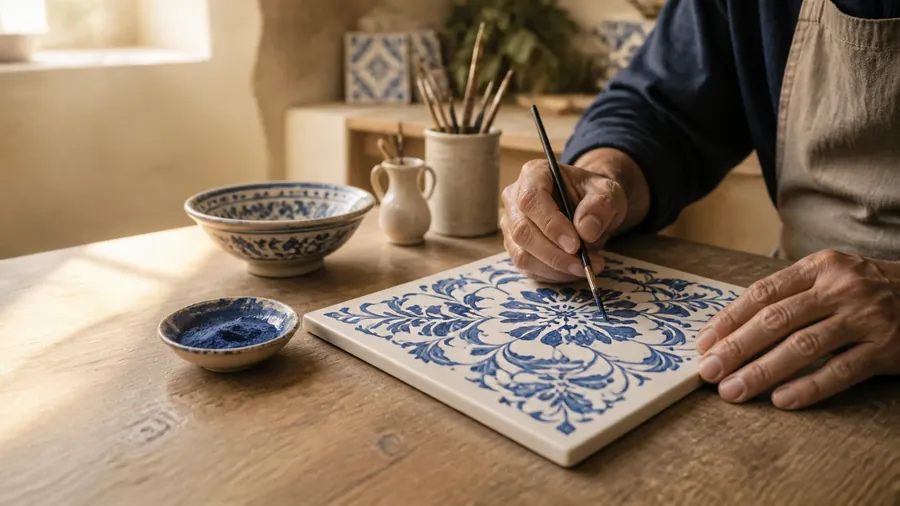
Small spaces are also seen at close range, which rewards detail. The brushwork, the pooling of the glaze and the subtle variation of a handmade tile are appreciated most when you are standing right next to them.
Where to use tile in a small space
Powder rooms
Because they are used briefly and rarely include a bath or shower, powder rooms can be as bold as you like. Tile the wall behind the basin, or wrap the whole room to waist height or all the way to the ceiling.
Shower niches and alcoves
Lining a niche in a contrasting pattern turns a practical storage space into a jewel-like detail. Frame the opening with a border tile or a brass edge trim for a crisp finish.
Entrances and hallways
An entrance sets the tone for the whole home. A tiled dado, a patterned panel beside the front door or a floor-rated tile underfoot brings character to a space that is often overlooked. If you want pattern on the floor, choose a design listed for light-traffic floors, such as Coastal Sand or Estrela Navy, and place a mat inside the door to catch grit.
Stair risers and utility rooms
Decorative tiles on stair risers, or a patterned backsplash in a laundry or utility room, bring personality to the most functional parts of a home.
Design tricks that make a small room feel larger
- Go full height. Tiling from floor to ceiling draws the eye upwards and makes the room feel taller.
- Don’t fear scale. A larger pattern or an 8″ × 8″ tile can make a small room feel calmer than a tiny, busy motif, because there are fewer grout lines and repeats to take in.
- Reflect the light. Satin and gloss glazes bounce light around a room with little or no daylight. Light tones such as Alentejo White or Nazaré Shell brighten it further.
- Match the grout. Grout that matches the tile background reduces visual clutter and lets the surface read as one.
- Choose one star. In a small room, let one surface carry the pattern and keep everything else quiet.
Pattern ideas for compact rooms
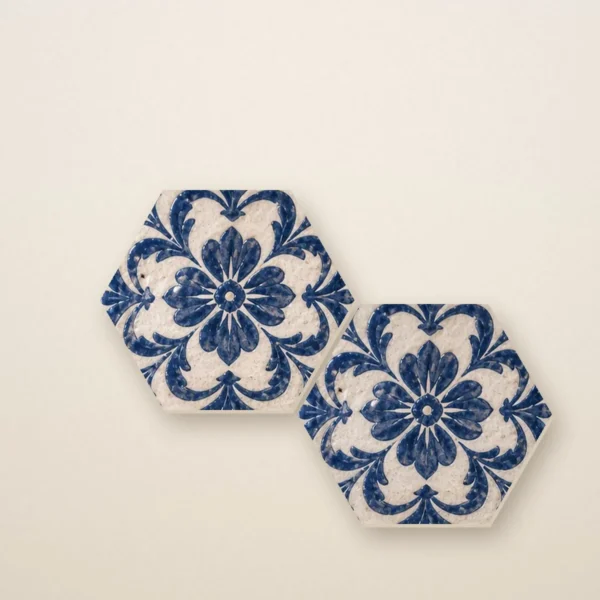
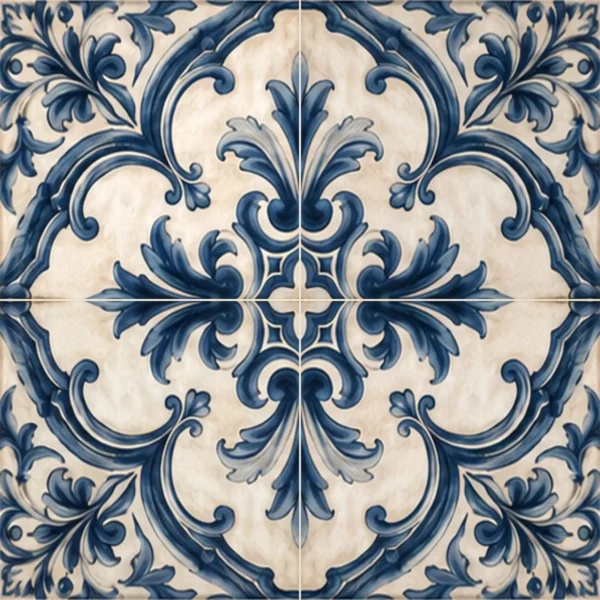
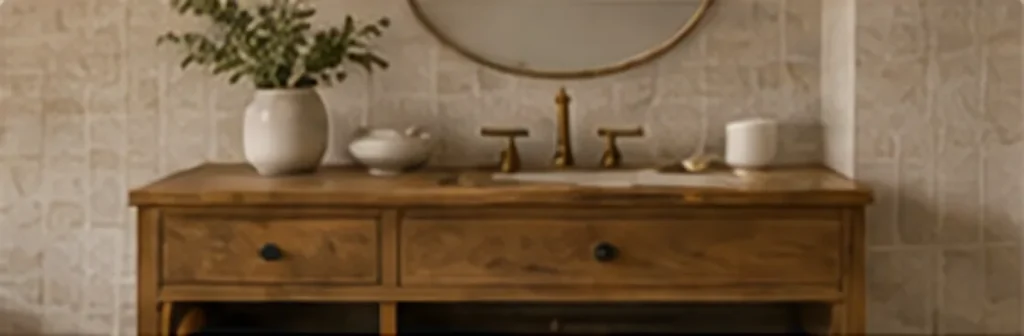
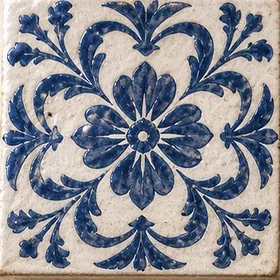
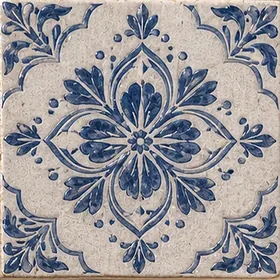
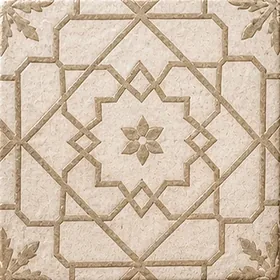
For a powder room with character, the classic cobalt designs of our Lisboa Blues collection never fail. For a softer, spa-like mood, the sand and stone tones of Coastal Neutrals pair beautifully with a timber vanity and brass fittings.
For drama, consider going dark. Deep navy designs such as Sevilla Navy or Atlantic Star create a cocooning, jewel-box effect, and many designers use dark colours to blur the corners of a small room so that its boundaries are harder to read.
Plan carefully, because every tile counts
In a small space, cuts are more visible. Measure carefully, centre the pattern on the basin, mirror or niche, and plan the layout so that any cut tiles fall in the least visible corners. In a shower niche, make sure the recess is fully waterproofed before tiling and that its base slopes slightly outwards so water drains away.
Small rooms often rely on artificial light, which changes how colours read, so order a free sample and look at it in the room itself with the lights on. Finally, keep a few spare tiles from your order: handmade batches vary, and tiles made at the same time are the best match for any future repair.
Quick answers
Should I use small or large tiles in a small bathroom?
Both can work. Larger 8″ × 8″ tiles mean fewer grout lines and a calmer surface, while 6″ × 6″ tiles suit tight spaces such as niches and narrow walls, where larger tiles would need more cutting.
Can patterned tiles make a small room look smaller?
Not if they are used with restraint. Limit the pattern to one surface, match the grout to the tile background and choose a light-reflecting finish. A single patterned wall often makes a small room feel more considered, not more cramped.
How many tiles do I need for a powder room wall?
Multiply the width of the wall by its height to find the area. At 6″ × 6″ you need four tiles per square foot, or about 44 per square metre; then add around 10 % for cuts and spares.